Most people visit an eye doctor only when something is visibly wrong — blurred vision, eye strain, headaches. This is understandable, but it’s also a missed opportunity. A comprehensive eye examination is one of the few routine health checks that can detect serious systemic conditions before you notice any symptoms at all.
Here’s what the science says — and what actually happens during a proper eye check-up.
Your Eyes Are a Window Into Your Overall Health
The retina is the only place in the human body where blood vessels can be directly observed without surgery or invasive procedures. This makes the eye uniquely valuable as a diagnostic tool.
During a comprehensive eye examination, a trained optometrist or ophthalmologist can identify signs of:
Diabetes — Diabetic retinopathy affects the small blood vessels in the retina and is one of the leading causes of blindness globally. According to the World Health Organization, approximately 1 in 3 people with diabetes show signs of diabetic retinopathy — and many don’t know they have diabetes at all until an eye exam flags it.
Hypertension — High blood pressure causes characteristic changes in retinal blood vessels — narrowing, nicking at crossings, and haemorrhages — that are visible during a dilated eye exam.
Glaucoma — Often called the “silent thief of sight,” glaucoma causes gradual loss of peripheral vision with no pain or early symptoms. The Indian Journal of Ophthalmology estimates that India has approximately 12 million people with glaucoma, and nearly half are unaware of it. Early detection through routine eye pressure measurement and optic nerve assessment can prevent irreversible vision loss.
Multiple sclerosis and neurological conditions — Optic nerve changes and specific visual field defects can be early indicators of neurological disease.
What Happens During a Comprehensive Eye Examination
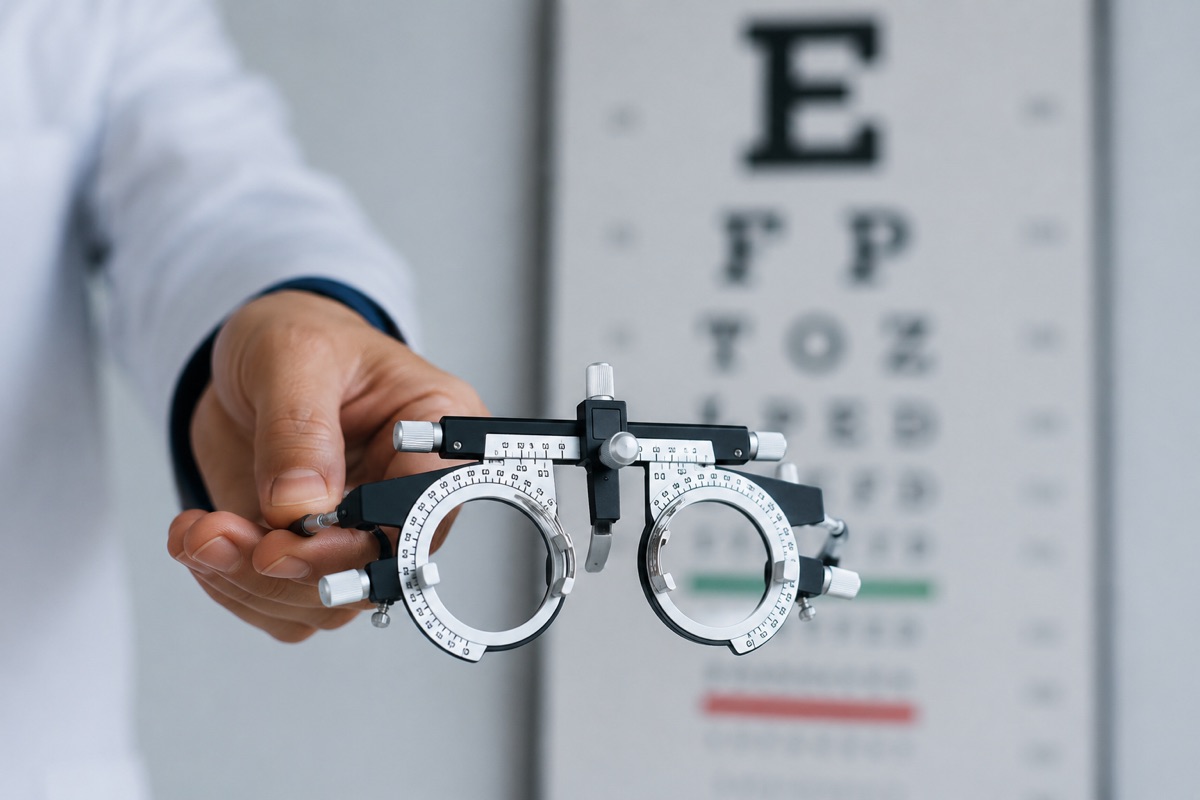
A thorough eye check-up is not just a refraction test (the “which is clearer, 1 or 2?” part). A complete examination includes:
Visual acuity test — Measures how clearly you see at distance and near.
Refraction — Determines your precise spectacle or contact lens prescription.
Slit-lamp examination — A biomicroscope that allows detailed examination of the front structures of the eye — cornea, iris, lens — to detect cataracts, corneal conditions, and other abnormalities.
Intraocular pressure measurement (tonometry) — Checks the pressure inside the eye. Elevated pressure is a major risk factor for glaucoma.
Fundus examination — With dilating drops or modern non-contact imaging, the retina, optic nerve, and blood vessels at the back of the eye are examined. This is where systemic disease signs and retinal conditions are detected.
Visual field test — Maps your peripheral vision. Defects in specific patterns indicate different conditions.
A full examination typically takes 30–45 minutes.
How Often Should You Get Checked?
General guidelines from the American Optometric Association and Indian ophthalmological bodies suggest:
| Age Group | Frequency |
|---|---|
| Children (6–18) | Every 1–2 years, or as directed |
| Adults (18–60), no risk factors | Every 2 years minimum |
| Adults with diabetes, hypertension, family history of eye disease | Every year |
| Adults over 60 | Every year |
| Existing spectacle/lens wearers | Every year (prescriptions change) |
Children in particular are often missed — many vision problems go undetected because children assume everyone sees the way they do. Poor vision is a significant contributor to academic difficulty in school-age children.
The Problem With “I Can See Fine”
Normal or near-normal visual acuity does not mean your eyes are healthy. Glaucoma, early diabetic retinopathy, and the early stages of macular degeneration can all be present with 6/6 (20/20) vision. By the time vision is noticeably affected, significant and often irreversible damage may have already occurred.
Prevention and early detection are always more effective — and less costly — than treatment after the fact.
A Simple Habit Worth Building
An annual eye check-up takes less than an hour. It can catch conditions that, if left undetected, lead to permanent vision loss or flag systemic diseases in their early, treatable stages.
At Deshpande’s Optiview, we provide comprehensive eye check-ups at all four Nashik branches. No appointment needed — walk in at any time during our hours and our team will take care of the rest.
Your vision is worth an hour a year.
References: World Health Organization. World Report on Vision, 2019. | American Optometric Association. Comprehensive Eye Exams. | Indian Journal of Ophthalmology — Glaucoma prevalence data, India.