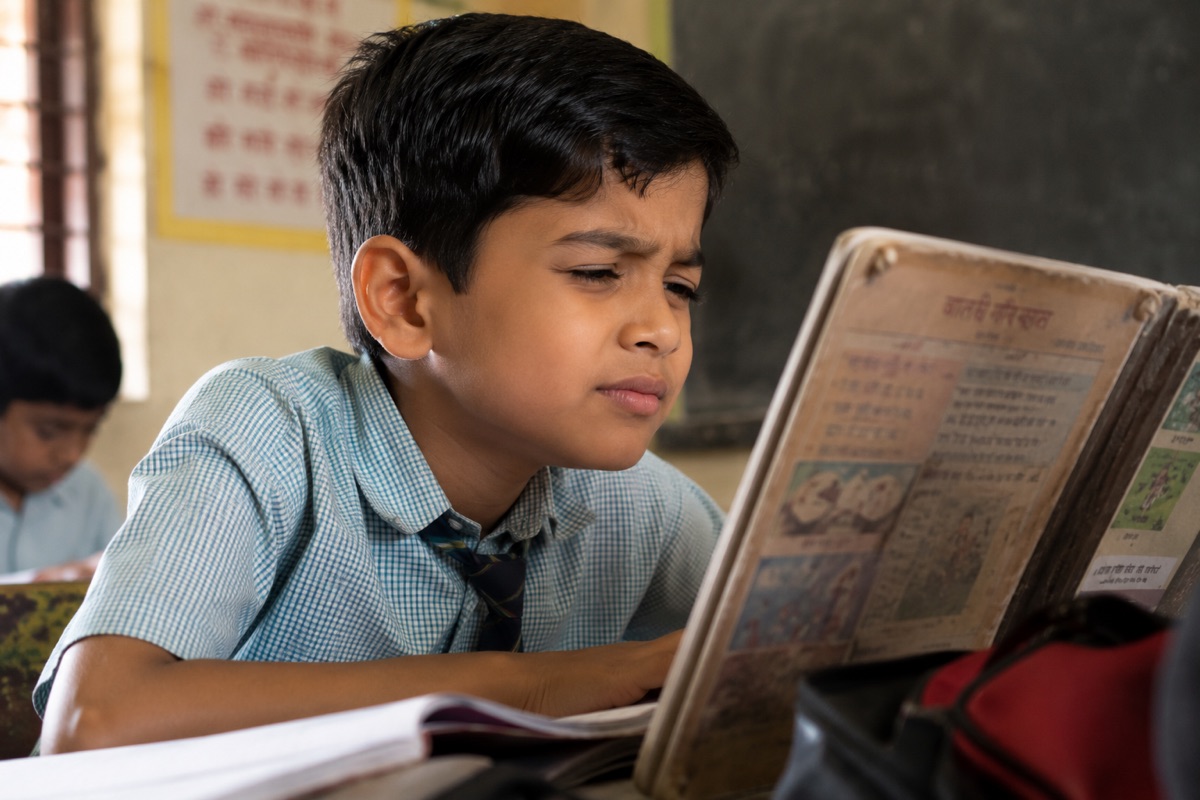
Children with vision problems rarely say “I can’t see clearly.” They don’t say it because they have nothing to compare their vision against — they assume the way they see is normal for everyone.
This is why childhood vision problems are so frequently missed, and why routine eye examinations for children are considered essential rather than optional by paediatric health guidelines.
How Common Is Uncorrected Vision in Children?
The numbers are significant. A 2019 report by the Brien Holden Vision Institute estimates that approximately 312 million children worldwide have uncorrected refractive errors. In India, studies suggest that 4–7% of school-age children have significant refractive errors requiring correction — and a substantial proportion are undetected.
The All India Ophthalmological Society has consistently highlighted the gap between children who need glasses and children who actually have them.
Behavioural Signs to Watch For
Because children do not typically self-report vision problems, parents and teachers must look for behavioural signals.
At home:
- Sitting very close to the television or holding a book/phone very close to the face
- Frequent squinting (which temporarily improves focus by reducing the aperture through which light enters the eye)
- Covering or closing one eye to see better — this is particularly significant and warrants prompt evaluation
- Frequent rubbing of the eyes, especially when reading or after screen use
- Tilting the head to one side when looking at things
- Short attention span for reading or writing activities that require sustained near-focus
At school:
- Difficulty reading from the board — sitting far from the front or asking to sit closer
- Holding study materials very close or at unusual angles
- Declining academic performance, particularly in subjects involving board work or extensive reading
- Reluctance to participate in sports, especially those requiring tracking of fast-moving objects at distance
- Complaining of headaches, particularly during or after school
Why Academic Performance Is Affected
The link between uncorrected vision and learning difficulty is well-established. A study published in Optometry and Vision Science found that children with uncorrected myopia demonstrated significantly lower reading speed and comprehension scores compared to age-matched peers with corrected vision.
The Indian context adds a specific concern: large class sizes mean children at the back of classrooms are at greater risk of missing board content. A child who consistently cannot read the board may appear inattentive or slow, when the actual issue is optical.
The Main Conditions That Cause These Signs
Myopia (Short-sightedness): The most common refractive error in children globally. Distant objects are blurred; near objects are clear. A child with myopia will struggle to read the board but may read books comfortably.
Hyperopia (Long-sightedness): Distant objects can often be seen adequately, but sustained near focus causes fatigue. Headaches after reading, difficulty sustaining attention on close work, and eye strain are common signs.
Astigmatism: Both near and distant vision can be blurred or distorted. Children may squint at any distance, experience headaches, and tilt their head to find a clearer angle.
Amblyopia (Lazy Eye): One eye develops stronger vision than the other, and the brain begins to suppress the weaker eye’s input. Without treatment in early childhood, the visual pathway for the weaker eye does not develop normally. If caught before age 7–8, treatment (glasses, patching, or a combination) can be highly effective. The window for full recovery closes as the visual system matures.
Strabismus (Crossed or misaligned eyes): One eye turns inward, outward, up, or down compared to the other. It is visually noticeable and requires prompt evaluation.
When Should Children Have Their First Eye Examination?
Recommendations from the Indian Paediatric Society and international ophthalmological organisations suggest:
- Before starting school (age 4–5): A basic visual acuity check is recommended for all children, regardless of whether parents have noticed problems.
- At school entry (age 5–6): A more comprehensive assessment, including checking for refractive error and binocular vision.
- Every 1–2 years through school age, even if the previous examination was normal — myopia in particular typically progresses during the school years.
A Note for Parents
If a teacher has mentioned that your child seems to struggle to see the board, or if you have noticed any of the signs above, an eye examination is the right next step. It is non-invasive, takes less than 30 minutes, and is completely painless.
Glasses do not weaken children’s eyes. This is a persistent misconception. Uncorrected vision, on the other hand, can affect a child’s development, learning, and confidence in ways that are entirely preventable.
At Deshpande’s Optiview, we see children of all ages at all four Nashik branches. Walk in anytime.
References: Brien Holden Vision Institute. Global Vision Impairment in Children, 2019. | Kulp MT et al. Effect of Refractive Error on Academic Achievement. Optometry and Vision Science, 2014. | All India Ophthalmological Society — School Eye Health Guidelines. | American Association for Pediatric Ophthalmology — Vision Screening.